
- Your cart is empty
- Continue shopping
-
 Pixis Visibility Service
 - Posted on
- Categories:Uncategorized
- 0 comments

Comparing herbal dant manjan tooth powders vs oil pulling for oral health, which Ayurvedic approach do practitioners recommend in 2026?
People everywhere actively seek natural alternatives for their daily routines. Comparing herbal dant manjan tooth powders vs oil pulling for oral health, which Ayurvedic approach do practitioners recommend in 2026? This question surfaces frequently as consumers move away from synthetic chemicals. The global interest in Ayurvedic oral care practices continues to grow. Traditional methods like Dant Manjan and oil pulling gain renewed attention in modern wellness routines because they offer gentle, natural results.
Introduction: Ayurvedic Oral Care in 2026
The resurgence of traditional oral hygiene reflects a broader shift toward natural health practices. At Goseva, we recognize the deep importance of authentic, Panchgavya-based products for true Ayurvedic benefits. Our roots trace back to a Gaushala established in 1960. With over 14 years of direct experience crafting these remedies, we understand how ancient wisdom translates into daily vitality. We empower rural gosalas and farmers while delivering quality-certified, genuine products. This article explores how these time-tested methods fit perfectly into contemporary dental care.
Dant Manjan: Herbal Tooth Powder for Oral Health
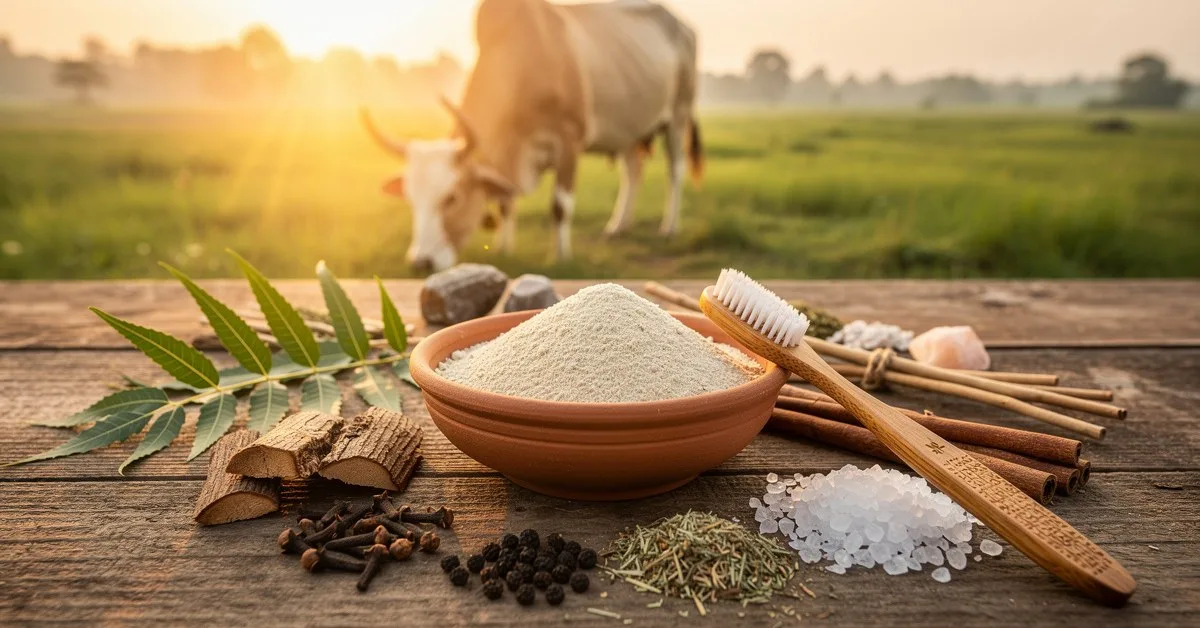
Dant Manjan is a traditional Ayurvedic herbal tooth powder used for centuries to strengthen teeth and gums. It plays an important role in the daily routine known as Dinacharya for maintaining excellent oral health. Our Goseva Ayurvedic Dant Manjan Tooth Powder combines time-tested ingredients for effective cleaning and protection. Unlike commercial pastes, this fine powder relies on the raw power of medicinal barks, roots, and leaves. The physical action of massaging the powder into the gum line stimulates blood flow while clearing away overnight buildup.
- Neem (antimicrobial action against oral bacteria)
- Babool (strengthens teeth and gums)
- Clove (pain relief and antibacterial properties)
- Triphala (detoxification and gum health support)
Common ingredients like Neem provide antimicrobial action against Streptococcus mutans, the primary bacteria responsible for tooth decay. Meanwhile, Clove offers potent anti-inflammatory properties for managing gingivitis. To use this traditional remedy, simply apply the powder to a wet brush or your index finger. Rub the mixture gently on your teeth and gums, then rinse thoroughly with water. This tactile method delivers direct contact between raw herbal compounds and your oral tissues, maximizing the absorption of active plant properties.
Oil Pulling (Gandusha/Kavala): Detoxification and Oral Hygiene
Oil pulling, known as Gandusha or Kavala in Ayurveda, involves holding oil in the mouth to reduce bacterial load and lubricate oral tissues. Gandusha involves holding oil completely still in the mouth until it thins. Kavala involves actively swishing the oil around the mouth and pulling it between the teeth. This ancient practice helps reduce plaque, gingivitis, and halitosis by trapping toxins in the lipid structure of the oil. The mechanical action of swishing also exercises the jaw muscles.
- Place 1 tablespoon of oil in your mouth
- Swish or pull gently for 10 to 20 minutes
- Do not swallow the oil
- Spit into a trash can, not the sink
- Rinse your mouth thoroughly with warm water
Common oils include coconut oil for its natural antimicrobial properties and pleasant taste. Many practitioners also recommend sesame oil as the traditional Ayurvedic choice for its deeply warming qualities. The core mechanism involves pulling toxins directly from oral tissues while significantly reducing bacterial levels that contribute to plaque and bad breath. As the oil moves through the oral cavity, it acts like a gentle solvent. It breaks down the sticky bacterial matrix without disrupting the delicate microbiome of your mouth.
Comparative Analysis: Dant Manjan vs. Oil Pulling
| Feature | Dant Manjan | Oil Pulling |
|---|---|---|
| Primary Benefits | Plaque removal, teeth strengthening, gum health | Detoxification, bacterial reduction, gum lubrication |
| Mechanism of Action | Direct herbal contact with teeth and gums | Oil swishing pulls toxins and bacteria |
| Application Protocol | Brush with powder, rinse, 2 times daily | Swish oil 10-20 minutes, once daily |
| Key Ingredients | Neem, Babool, Clove, Triphala | Coconut oil, Sesame oil |
| Safety Profile | Generally safe, check for herb allergies | Generally safe, avoid if oil allergies exist |
Dant Manjan is more active for plaque removal and strengthening, relying on gentle friction and potent herbal astringents. Oil pulling is superior for deep detoxification, tissue lubrication, and overall gum health. Understanding these distinct differences helps users choose which method suits their specific oral health needs. A dry mouth might crave the soothing lipids of sesame oil. A mouth feeling heavy with morning buildup benefits from the scrubbing action of herbal powder. Both approaches offer highly valuable benefits when used correctly.
Ayurvedic Practitioner Recommendations for 2026: The Hybrid Approach
Ayurvedic practitioners in 2026 increasingly recommend a hybrid approach, combining both Dant Manjan and oil pulling for peak results. Dant Manjan cleans the surface and strengthens the roots, while oil pulling detoxifies the deeper tissues and soothes the mucous membranes. Together, they offer combined benefits that a single product cannot match. This integrated method fits perfectly into your morning Dinacharya for complete oral care. By layering these practices, you address both the structural integrity of your teeth and the biological balance of your mouth.
The most effective oral care routine combines the mechanical cleaning of Dant Manjan with the detoxifying properties of oil pulling. This hybrid approach addresses multiple aspects of oral health simultaneously.
Ayurvedic Practitioner Recommendation
Your individual constitution, known as Prakriti, plays a major role in how you should structure your routine. Specific concerns like sensitive gums versus heavy plaque may influence the balance between these two practices. A person with excess heat might prefer cooling coconut oil, while someone needing more stimulation might lean on the astringent herbs in the tooth powder. We encourage consulting with qualified Ayurvedic practitioners for personalized guidance customized for your specific needs. They can help you fine-tune the ratios for maximum benefit.
Integrating Ayurvedic Practices with Modern Dentistry
Ayurvedic practices complement, not replace, conventional hygiene methods like fluoride toothpaste, flossing, and regular dental check-ups. The American Dental Association and Cleveland Clinic perspectives support these traditional methods as supportive but not standalone solutions. A complete approach integrating the best of both worlds provides total oral health. You can easily maintain your relationship with your local dentist while upgrading your daily home care routine with natural, Panchgavya-based additions. This balanced perspective helps you catch structural issues early while maintaining daily biological harmony.
Beyond Dant Manjan and Oil Pulling: Other Ayurvedic Oral Care Practices
- Tongue scraping (Jihwa Nirlekhana) for removing toxins and improving breath
- Gum massage (Pratisarana) for circulation and mouth freshening
- Mukha Shuddhikaran for overall oral hygiene maintenance
These additional practices reinforce the complete nature of Ayurvedic care and contribute to overall oral health when incorporated into daily routines. Each method addresses different aspects of oral wellness for total protection. Tongue scraping removes the coating of toxins that accumulates overnight, preventing those bacteria from migrating back to your teeth. Gum massage strengthens the periodontal tissue, making it more resilient. Together, these small habits build a fortress of natural defense.
Evidence and Research: What the Studies Say
Studies from PMC, PubMed, and Nature.com support plaque reduction and gingivitis improvement with both Dant Manjan and oil pulling methods. Research findings indicate measurable reductions in Streptococcus mutans levels with consistent use of these traditional practices. Modern science is catching up to what Ayurvedic sages documented thousands of years ago. The antimicrobial properties of herbs like Neem and Clove show clear efficacy in laboratory settings. However, more large-scale studies are needed to fully validate all claimed benefits across diverse populations.
Results can vary by individual, and practitioners readily acknowledge limitations in current research. The existing evidence supports these methods as highly valuable additions to daily oral care routines, though they should complement rather than replace conventional dental hygiene. Science confirms that mechanical brushing and lipid-based swishing disrupt bacterial colonies effectively. By embracing these natural methods, you add an extra layer of evidence-backed protection to your morning ritual.
Practical Takeaways and Ideal Daily Routine
- Morning oil pulling for 15 minutes to detoxify
- Rinse mouth thoroughly after oil pulling
- Use Dant Manjan for cleaning and strengthening
- Finish with tongue scraping for complete hygiene
For quality products, look for authentic, organic, Panchgavya-based items from GoMataSeva. Our Goseva Ayurvedic Dant Manjan Tooth Powder combines traditional ingredients for highly effective oral care. We source our materials directly from our award-winning cow trail, guaranteeing every batch meets the highest standards of purity. We also recommend consulting Ayurvedic practitioners or dentists for personalized guidance customized for your specific needs.
FAQ: Common Questions About Dant Manjan and Oil Pulling
Can I use Dant Manjan and Oil Pulling together?
Yes, Ayurvedic practitioners in 2026 strongly recommend using both together. Start with oil pulling in the morning to detoxify, then rinse and use Dant Manjan for cleaning and strengthening. This hybrid approach maximizes the benefits of both practices.
Which is better for bad breath (halitosis)?
Both are effective. Oil pulling reduces toxins and bacteria that cause bad breath, while Dant Manjan’s herbs like Neem and Clove provide strong antimicrobial action. Combining them offers the best defense against halitosis.
Is oil pulling safe for everyone?
Oil pulling is generally safe for most people. However, people with allergies to specific oils like coconut should choose alternatives like sesame oil. If you have specific oral health conditions, consult a dentist or Ayurvedic practitioner first.
How long does it take to see results from these practices?
Results vary by individual. Many people notice reduced plaque and fresher breath within 2-3 weeks of consistent use. Improvements in gum health and reduced gingivitis may take 1-2 months. Consistency is key for long-term benefits.
Conclusion: A Complete Future for Oral Health
Ayurvedic practitioners in 2026 recommend a combined approach using Dant Manjan and oil pulling for excellent oral health outcomes. This shift toward personalized, whole-body oral care uses traditional wisdom with modern understanding for total protection. The future of oral health is integrated, natural, and highly effective. People no longer have to choose between clinical efficacy and natural purity. By embracing the full spectrum of Dinacharya, you protect your teeth while honoring your body’s natural balance.
For those ready to explore authentic Ayurvedic oral care, we offer Goseva Ayurvedic Dant Manjan Tooth Powder and recommend learning more about herbal tooth powder benefits. Our deep commitment to Panchgavya-based products guarantees you receive authentic formulations for your wellness journey. Every purchase supports rural farmers and sustains our heritage Gaushala, bringing the purest elements of nature directly to your home.
