
- Your cart is empty
- Continue shopping
-
 Pixis Visibility Service
- Posted on
- Categories:Uncategorized
- 0 comments

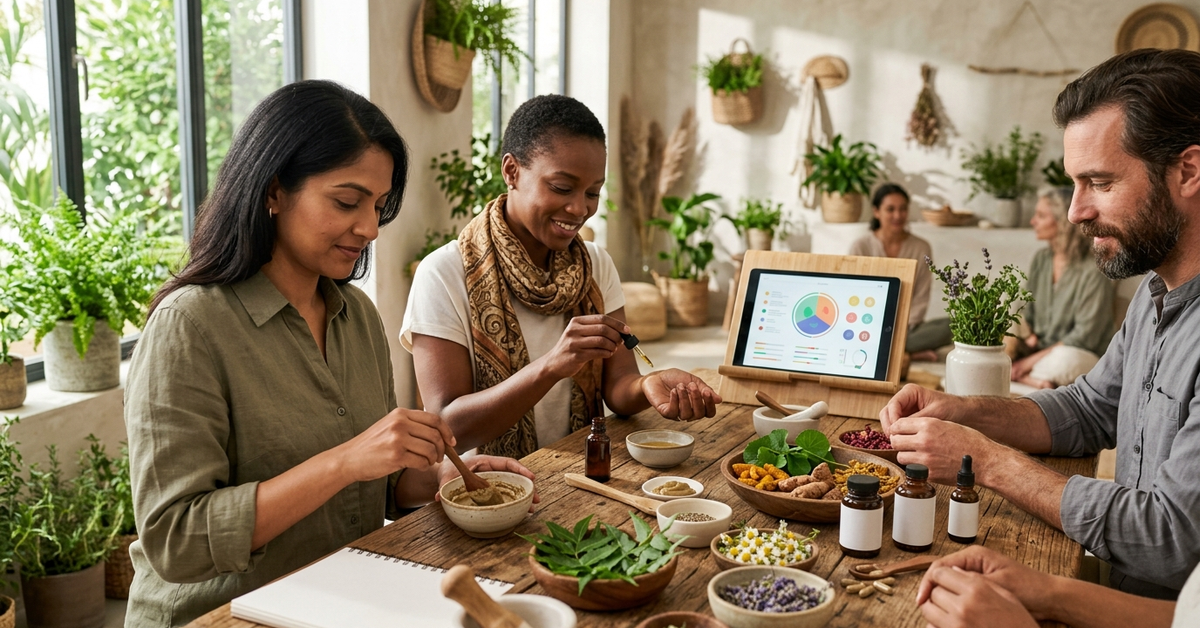
Natural wellness is moving mainstream in 2026. The question ‘what are the growing trends in Vedic and Ayurvedic wellness products in 2026’ has shifted from a niche query to a mainstream one. Consumers, retailers, and researchers are all asking it. Goseva has spent over 14 years working with a Gaushala that has operated since 1960. We produce authentic Panchgavya products from Gir cows. This guide breaks down five trends reshaping Ayurvedic wellness and what they mean for buyers today.
What are the growing trends in Vedic and Ayurvedic wellness products in 2026?
Ayurvedic wellness products are entering a period of rapid growth. Markets that once treated Ayurveda as a specialty category now recognize it as a mainstream wellness system with documented preventive health benefits. This guide covers five trends shaping Ayurvedic wellness in 2026: AI-powered personalization, scientific validation, sustainable sourcing, product innovation, and global expansion. Each trend connects back to the same principles that have guided Vedic wellness for millennia. Goseva’s Panchgavya-based Ayurvedic products and herbal powders fit within this movement, combining traditional Gir cow formulations with the quality certification standards today’s consumers expect.
The resurgence of Vedic and Ayurvedic wellness: a global shift
A shift from conventional medicine to preventive care is changing how people approach their health. Chronic disease rates, aging populations, and the side effects of long-term pharmaceutical use have pushed consumers toward natural wellness solutions with documented safety records. Ayurveda and Vedic wellness systems address diet, lifestyle, and mental wellbeing as connected parts of health rather than isolated symptoms. Grand View Research values the global Ayurveda market at USD 20.42 billion in 2025, with Asia Pacific holding 78.62% of that share. Research and Markets projects the healthcare and consumer care Ayurveda products market will grow from USD 20.31 billion in 2025 to USD 24.14 billion in 2026. That represents a CAGR of 18.8%. The consumer mindset driving this growth favors clean, natural, side-effect-free products over synthetic alternatives.
Growth drivers and market overview for 2026
Several forces are fueling the expansion of Ayurvedic wellness products through 2026. Rising consumer awareness of synthetic ingredient risks, demand for clean-label formulations, and a growing preference for preventive healthcare all contribute to market growth. Digital platforms and social media have made Ayurvedic education accessible to global audiences, creating informed buyers who ask specific questions about sourcing, certification, and ingredient integrity. Technavio projects the global Ayurveda market will increase by USD 12.93 billion between 2025 and 2030, growing at a CAGR of 19.9%. The year-over-year growth rate for 2025 to 2026 stands at 17.5%. Asia is projected to contribute 80.2% of incremental market growth. North America and Europe emerge as high-growth regions driven by natural wellness trends.
- Rising consumer awareness of synthetic ingredient risks drives demand for natural alternatives
- Clean-label products gain traction as 83% of UK households buy organic annually and 67% intentionally purchase organic, per the Soil Association
- Preventive healthcare focus shifts spending toward wellness products over reactive treatments
- Digital platforms and social media accelerate Ayurvedic education for global audiences
Trend 1: personalization and digital integration (AI-powered wellness)
AI and digital platforms are making Ayurvedic personalization accessible at scale. A 2025 ScienceDirect review on AI in traditional medicine examines how machine learning, deep learning, and large language models can improve diagnosis accuracy and decision-making. These tools also aim to improve patient experience while reducing costs. In practice, some platforms offer AI-powered dosha assessments. These tools analyze an individual’s prakriti, the Ayurvedic term for constitutional type, along with current imbalances and symptom patterns. The systems then recommend specific products and protocols. Most of these applications remain experimental or in early deployment rather than widely established consumer tools. Digital health apps now connect consumers with Ayurvedic practitioners for telehealth consultations, bringing traditional guidance to people who live far from any Ayurvedic clinic. A 2026 study published through Atlantis Press describes a RAG-based chatbot for dosha classification that achieved 96.83% accuracy using a Transformer model. The Journal of Indian System of Medicine (JISM) cautions that AI tools should complement, not replace, clinician knowledge. The journal also notes that unresolved issues around patient data ownership and intellectual property need attention as adoption grows.
Trend 2: scientific validation and modern integration
Scientific research and modern manufacturing standards are legitimizing Ayurvedic products for mainstream adoption. India’s Union Budget 2026–27 includes upgrades to the WHO Global Traditional Medicine Centre in Jamnagar to strengthen evidence-based research, training, and awareness for traditional medicine. The government is also establishing three new All India Institutes of Ayurveda for quality education, clinical care, and research. The AYUSH Vertical under the Directorate General of Health Services has published Standard Treatment Guidelines for six musculoskeletal disorders in 2024 and five metabolic disorders in 2025. Integrated AYUSH departments now operate at major hospitals in New Delhi, providing preventive, promotive, and therapeutic services including Panchakarma. For consumers, this institutional investment translates to products backed by clinical research rather than anecdote alone. Research on Panchgavya’s wellness benefits supports the principle that studying and documenting traditional formulations’ mechanisms is essential for validation, standardization, and therapeutic development. Goseva’s quality-certified products reflect this bridge between classical Ayurvedic texts and modern standards.
Trend 3: sustainability, ethical sourcing, and clean labels
Consumers in 2026 want to know where their wellness products come from and how the ingredients were produced. Technavio’s market analysis flags a central supply challenge: over-harvesting and climate change threaten the availability and phytochemical properties of medicinal herbs sourced from ecologically sensitive areas. This leads to supply chain instability and instances of adulteration that erode consumer trust. A shift to sustainable cultivation is underway, though it requires substantial investment and time. For Panchgavya products, sourcing from indigenous Gir cows at authentic gosalas provides the traceability that conscious consumers demand.
Research and Markets notes that growing awareness of health risks from synthetic ingredients drives demand for organic and natural alternatives. In Ayurveda, organic and natural ingredients support healing and balance without chemicals. The Indian government’s Central Sector Scheme for Conservation, Development and Sustainable Management of Medicinal Plants provides national-level support for sustainable sourcing. Goseva supports rural gosalas and farmers. Our Gir-cattle conservation work was recognised with the ICAR–NBAGR Breed Conservation Award 2023.
Our Panchgavya products are made from natural ingredients without synthetic preservatives. Browse our full range to find the formulation that fits your wellness routine.
Trend 4: product innovation and diversification across categories
Ayurvedic product formats are diversifying well beyond traditional powders and oils. Grand View Research reports that herbals dominated the market in 2025 with a 69.16% share by form, while skin and hair applications led by indication at 25.57%. Brands are formulating herbal supplements as gummies and capsules, creating Ayurvedic skincare lines, and developing specialized products for stress management, sleep support, and gut health. Adaptogens like ashwagandha and tulsi appear in functional foods and beverages. The personal care segment accounted for the largest revenue share in 2024, according to Technavio. That lead continues as consumers replace synthetic cosmetics with plant-based and Panchgavya-based alternatives.
Trend 5: global expansion and mainstream adoption
Ayurvedic wellness products are moving beyond their traditional markets in Asia and gaining traction in Europe and North America. Technavio notes that North America and Europe are high-growth regions driven by natural wellness and integrative medicine trends, though brands need clinical validation to enter these Western markets. As of February 2026, India’s Union Budget 2026–27 proposes five Regional Medical Hubs in partnership with the private sector, each housing AYUSH Centres, Medical Value Tourism Facilitation Centres, and advanced infrastructure for diagnostics and rehabilitation. The Ministry of AYUSH operates the National AYUSH Mission as a Centrally Sponsored Scheme, supporting co-location of AYUSH facilities at primary health centers and district hospitals. Indian Public Health Standards for AYUSH Healthcare Facilities were developed in 2024 to standardize infrastructure, human resources, and service quality. Panchgavya products derived from Gir cows are gaining global attention as part of this expansion.
Regulatory hurdles and the path forward
The Ayurvedic wellness industry faces real obstacles in quality control, regulatory harmonization, and supply chain integrity. Technavio identifies the lack of regulatory harmonization for dietary supplements across different countries as a barrier that complicates market access. This requires rigorous supply chain transparency to ensure product authenticity and safety. The AYUSH Oushadhi Gunvatta evam Uttapadan Samvardhan Yojana, or AOGUSY, addresses quality, standardization, and regulatory oversight of Ayurveda, Siddha, Unani, and Homeopathy drugs through a Central Sector Scheme. Genetics and Molecular Research notes that most AI studies in Ayurveda remain proof-of-concept work limited by small datasets, inconsistent methods, and minimal external validation. The brands that invest in quality certification, transparent sourcing, and documented efficacy will be the ones consumers trust as the market matures toward 2026 and beyond.
Frequently asked questions about Ayurvedic trends in 2026
Here are answers to common questions about Ayurvedic trends in 2026.
What is the projected market size of the Ayurvedic industry in 2026?
Research and Markets projects the healthcare and consumer care Ayurveda products market will reach USD 24.14 billion in 2026, up from USD 20.31 billion in 2025. The same source forecasts the market reaching USD 47.62 billion by 2030. Grand View Research values the broader global Ayurveda market at USD 20.42 billion in 2025, growing toward USD 85.83 billion by 2033 at a 19.72% CAGR.
How is AI changing Ayurvedic wellness products?
AI enables personalized wellness through dosha assessments that analyze prakriti, current imbalances, and symptom patterns. The Journal of Clinical Ayurveda and Translational Medicine reviewed 62 primary studies from 2010 to 2021. It found knowledge-graph hybrid systems scored highest on the AI Personalisation in Ayurveda Index at 0.842. Digital apps also connect consumers with practitioners for telehealth, making traditional Ayurveda more accessible for modern lifestyles.
Why is scientific validation important for Ayurvedic products?
Scientific validation builds consumer trust and enables mainstream adoption by proving efficacy through clinical studies. India’s Ministry of AYUSH funds nine national-repute institutions under the Centre of Excellence component of Ayurswasthya Yojana. These include Tata Memorial Centre Mumbai, IIT Delhi, and NIMHANS Bangalore, to improve efficacy and global acceptance. NCISM has also developed MBBS Internship Electives in Ayurveda, with modern advances comprising up to 40% of teaching content.
What are the main trends in sustainable Ayurvedic sourcing?
Sustainable sourcing trends include ethical herb cultivation, eco-friendly packaging, and clean labels free from synthetic chemicals. The Indian government’s Central Sector Scheme for Conservation, Development and Sustainable Management of Medicinal Plants provides national-level support. Goseva sources from rural gosalas and Gir cows, ensuring traceable production. The AYUSH Annual Report 2024–25 records 49.66 crore beneficiaries under the DBT scheme from 2019–20 through June 30, 2024, showing the scale of government investment.
Are Panchgavya products gaining global popularity?
Yes. Panchgavya products from Gir cows are gaining traction in North America and Europe as consumers seek natural, traditional wellness solutions. As of February 2026, India’s Union Budget 2026–27 formalizes AYUSH inclusion in Medical Value Tourism through five Regional Medical Hubs in partnership with the private sector. The Ministry of AYUSH also runs the AYURGYAN scheme. Its Ayurveda Biology Integrated Health Research component, active from FY 2023–24, funds high-end research integrating basic sciences with conventional medicine to support global acceptance.
Embracing the future of Vedic wellness
The five trends shaping Vedic and Ayurvedic wellness in 2026, from AI personalization to sustainable sourcing, share one thread: they make traditional wisdom work for modern lives without diluting its integrity. Goseva’s 14+ years with a Gaushala operating since 1960, the ICAR–NBAGR Breed Conservation Award 2023 for our Gir-cattle conservation, and our quality-certified Panchgavya products position us within this movement. Explore our Panchgavya product guide to find authentic Gir cow formulations for your daily wellness routine, or browse our full product range to experience traditional wellness backed by modern standards.
Shop at Goseva: Goseva Ayurvedic Ghritas – classical ghee-based formulations from Gir cow ghee.
