
- Your cart is empty
- Continue shopping
-
 Pixis Visibility Service
 - Posted on
- Categories:Uncategorized
- 0 comments

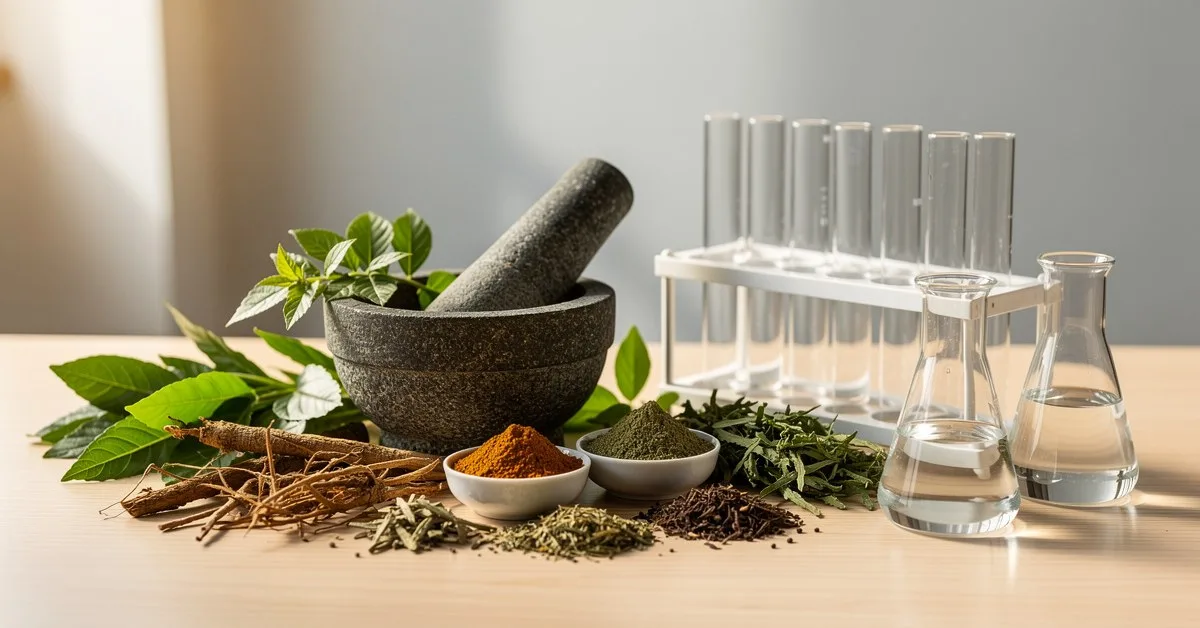
How does Vedic Ayurvedic formulation differ from modern Ayurvedic product manufacturing and why does it matter for efficacy? This question sits at the center of the natural wellness conversation right now. People looking for genuine healing often find themselves staring at store shelves, trying to tell the difference between remedies based on ancient knowledge and those built for factory speed. Knowing this difference matters deeply. The way a medicine is prepared directly shapes its healing power. When you choose a remedy, you are choosing the entire philosophy behind its creation. Many buyers want to trust the process, knowing that the herbs and minerals were handled with respect rather than rushed through a chemical solvent.
Introduction: Understanding Ayurvedic Formulations
Ayurvedic formulations represent a highly developed system of medicine that has grown over thousands of years. Traditional Ayurveda looks at health as a delicate balance of bodily humors, focusing on whole-body healing through natural substances. Vedic Ayurveda specifically points to the classical methods written down in ancient texts like the Charaka Samhita and Sushruta Samhita. These foundational works offer much more than basic ideas. They provide exact recipes and detailed processing instructions that have guided practitioners for centuries. Every step serves a specific purpose, designed to draw out the maximum benefit from every leaf, root, and mineral. The practitioners who wrote these texts understood that the human body responds best to nature in its most complete form.
Vedic/Classical Ayurvedic Formulation: Principles and Practices
Classical Ayurvedic formulation relies on strict obedience to those ancient texts and traditional processing methods. The entire philosophy centers on polyherbal synergy. This means multiple ingredients work together to create a multi-targeted healing effect. One herb might target the primary ailment, while another acts as a carrier to improve absorption, and a third buffers any potential harshness. This approach looks very different from modern pharmacology, which usually isolates a single active compound to treat a specific symptom. Traditional processing guarantees that the bioavailability and potency of the herbs reach their peak through highly specific techniques. By treating the ingredients as a collective network rather than isolated chemicals, classical methods preserve the natural intelligence of the plants.
- Bhāvanā: A careful process of repeated trituration with herbal juices or decoctions to naturally enhance absorption and potency.
- Shodhana: The rigorous purification of raw materials to remove naturally occurring toxins and dramatically increase therapeutic value.
- Sandhana: Specific fermentation processes used to create highly effective liquid formulations like Arishta and Asava.
- Marana: The precise calcination of metals and minerals to render them completely safe and highly bioavailable for human use.
Modern Ayurvedic Product Manufacturing: Approaches and Standardization
Modern Ayurvedic product manufacturing takes a different path, focusing heavily on industrial-scale production and standardization based on active chemical constituents. Large companies use modern extraction techniques to pull out specific compounds, aiming to guarantee exact consistency across massive batches. Regulatory bodies like the Ministry of AYUSH and international standards like WHO GMP guidelines often drive this approach. The main goal here is to make traditional medicine accessible and safe for a massive global market through strict quality control measures. While this scale brings natural remedies to more people, it shifts the focus away from the whole plant. The emphasis lands on measurable chemical markers rather than the complex, synergistic relationships found in the original plant material.
Key Differences Between Vedic and Modern Manufacturing
| Parameter | Vedic/Classical Formulation | Modern Manufacturing |
|---|---|---|
| Raw Material Selection | Seasonal and ritualistic harvesting based on texts | Year-round availability and bulk sourcing |
| Processing Method | Traditional methods like Bhāvanā and Shodhana | Industrial extraction and chemical solvents |
| Standardization | Process fidelity and text-based recipes | Chemical marker compounds and batch consistency |
| Formulation Type | Shāstrokta (Classical) based on ancient texts | Anubhuta (Proprietary) designed by manufacturers |
| Efficacy Focus | Multi-targeted network pharmacology and synergy | Single-compound isolation and targeted relief |
Impact on Efficacy: Why Manufacturing Differences Matter
The manufacturing method directly influences therapeutic efficacy through bioavailability and phytocompound retention. Classical methods like Bhāvanā break down particle sizes naturally, enhancing the absorption of active compounds without relying on harsh chemical solvents. The repeated grinding and mixing with liquid extracts change the physical structure of the herbs, making them easier for the body to recognize and use. Modern extraction can certainly speed up the release of specific constituents, but it often alters the phytochemical profile compared to a classical preparation. This shift in the chemical makeup can disrupt the multi-targeted action that defines traditional Ayurvedic healing. The natural harmony of the plant is lost, potentially reducing the overall effectiveness of the remedy.
Polyherbal formulations are built to exert a network pharmacology effect, where several bioactive molecules act on multiple targets at once. Isolating a single compound might offer quick, targeted relief for a specific issue, but it loses the natural buffering and synergy found in traditional mixtures. Research shows that formulation design and manufacturing consistency can materially affect the finished product’s biological properties. The choice between Vedic and modern methods goes far beyond simple tradition. It directly impacts the desired therapeutic outcome. A fully integrated herbal mixture supports the body’s natural healing mechanisms, addressing root causes rather than just suppressing symptoms.
Quality Control, Standardization, and Regulatory Implications
Quality control in Ayurveda involves a constant tension between standardizing for chemical markers and maintaining true process fidelity. The Ministry of AYUSH enforces Schedule T of the Drugs and Cosmetics Act as the Indian GMP framework for these drugs. Manufacturers must follow strict guidelines regarding cleaning, equipment, and temperature control to guarantee safety. These rules protect consumers from contamination. However, strict chemical standardization rarely captures the holistic efficacy of a classical preparation. A lab test might confirm a specific molecule, but it cannot measure the synergistic energy created by traditional processing.
Safety remains the top priority, especially in traditions like rasa shastra that incorporate metals or minerals. If the traditional detoxification steps are not strictly followed, the resulting products can contain dangerous amounts of heavy metals. This reality highlights the absolute need for rigorous quality control, regardless of the manufacturing method chosen. Consumers need to look for products that successfully balance traditional integrity with modern safety standards. A trustworthy manufacturer will never cut corners on purification, making sure every mineral becomes a safe source of healing.
Challenges and Future Directions in Ayurvedic Product Development
The industry currently faces a gap between traditional wisdom and modern scientific validation. We see a need for rigorous clinical trials to bridge this divide and validate classical claims. The ongoing debate around proprietary versus classical formulations continues to shape the future of Ayurvedic product development. Integrating the strengths of both approaches could enhance efficacy while maintaining safety and scalability. By applying modern testing methods to verify the safety of classically prepared remedies, we can offer the best of both worlds.
Frequently Asked Questions About Ayurvedic Formulations
What is the main difference between Vedic and modern Ayurvedic formulations?
The primary difference lies in the processing. Vedic formulations rely on ancient texts and traditional methods like Bhāvanā to enhance polyherbal synergy and bioavailability naturally. Modern manufacturing usually focuses on industrial-scale extraction, prioritizing the standardization of single active chemical compounds to achieve batch consistency.
Why is the Bhāvanā process important for Ayurvedic efficacy?
Bhāvanā is a traditional process of triturating herbs with liquid extracts over an extended period. It breaks down particle size, enhances the absorption of active compounds, and increases the overall potency and bioavailability of the formulation, all without relying on harsh chemical solvents.
Are modern standardized Ayurvedic products less effective?
They are not necessarily less effective, but they do work differently. Modern products often isolate specific compounds for targeted relief. However, they may lose the multi-targeted network effect and natural buffering provided by the complex polyherbal synergy found in traditional Vedic formulations.
How does Goseva ensure the quality of its traditional Ayurvedic products?
Goseva strictly adheres to authentic Panchgavya and traditional Ayurvedic principles while actively supporting rural gosalas. We focus entirely on process fidelity, verifying that traditional methods are followed closely to maintain the natural efficacy, safety, and holistic benefits of our entire product line.
Conclusion: Reconciling Tradition and Modernity for Optimal Efficacy
Understanding the differences between Vedic and modern manufacturing is essential for consumers seeking authentic healing. While modern methods offer consistency and safety, traditional processes preserve the holistic synergy that defines true Ayurvedic efficacy. We believe that optimal results come from honoring the ancient wisdom of Shāstrokta formulations while maintaining rigorous quality standards. When you choose remedies prepared with patience and respect for the original texts, you give your body the complete benefit of the plant. Explore our range of authentic Panchgavya-based Ayurvedic products to experience the difference traditional methods make in your daily wellness routine.
For those interested in the traditional Bilona method of making A2 Gir Cow Ghee, we highly recommend reviewing our pure real cow ghee page. This detailed look at the Bilona process highlights exactly how Vedic preparation impacts both purity and efficacy. The slow, deliberate churning process retains the essential nutrients that industrial separation destroys. By choosing authentic formulations, you support both your health and the preservation of ancient knowledge. You also help sustain the rural farmers and gosalas who keep these living traditions alive.
