
- Your cart is empty
- Continue shopping
-
 Pixis Visibility Service
 - Posted on
- Categories:Uncategorized
- 0 comments

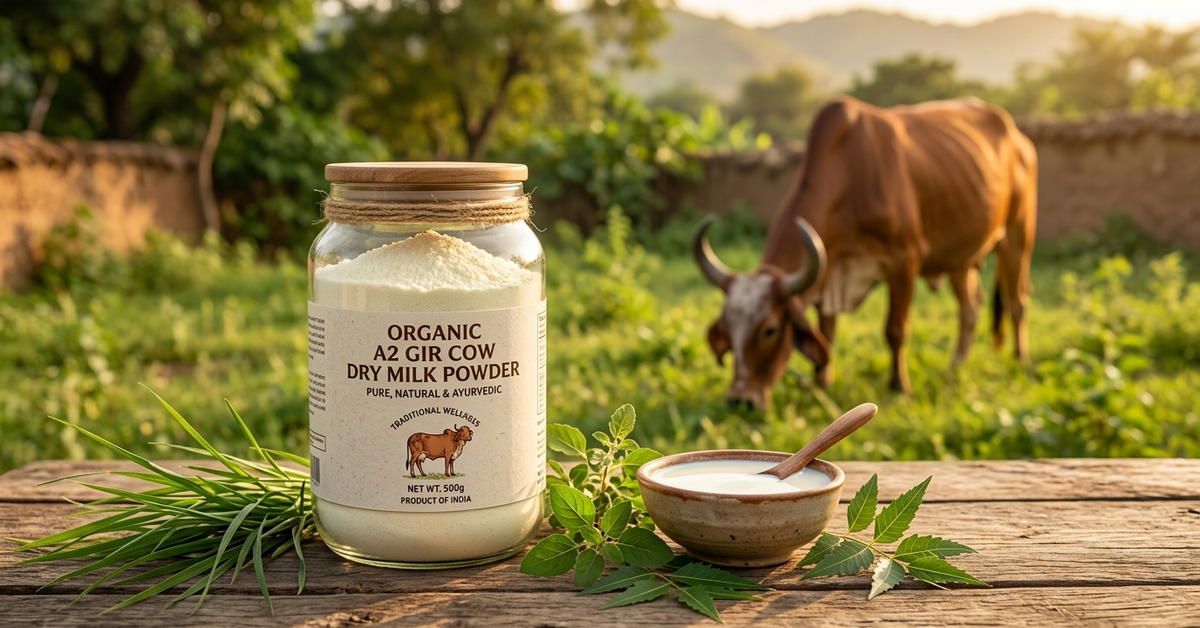
A2 Gir cow dry milk powder is a cornerstone of traditional Ayurvedic nutrition, valued for its digestibility and nourishing properties. If you want to know how to evaluate the purity of A2 Gir cow dry milk powder before purchasing for Ayurvedic dietary use, you need a framework that combines breed verification, laboratory testing, and sourcing transparency. Purity is non-negotiable for therapeutic benefits. Impure or adulterated milk powder can trigger inflammation and digestive issues that contradict the very goals of Ayurveda. This guide walks you through every step so you can buy with confidence.
How to Evaluate the Purity of A2 Gir Cow Dry Milk Powder Before Purchasing for Ayurvedic Dietary Use
The evaluation process requires both traditional Ayurvedic knowledge and modern scientific verification. You are not simply buying a dairy product; you are investing in a food that supports health on a therapeutic level. Every claim on a label needs documentation, from breed certificates to third-party lab reports. At Goseva, our Gir Cow A2 Dry Milk Powder is sourced from pure Gir cows and processed to retain natural protein, calcium, and health benefits. You should apply the same level of scrutiny to any brand you consider.
Introduction: Why Purity Matters for A2 Gir Cow Dry Milk Powder in Ayurvedic Use
In Ayurveda, cow milk is described as sweet, cooling, and nourishing, making it a foundational food for building vital energy. A2 milk from pure Gir cows carries these properties in their most authentic form. The beta-casein in A2 milk breaks down differently during digestion compared to A1 milk from crossbred cows. A1 beta-casein releases a bioactive opioid-like peptide called beta-casomorphin-7 (BCM-7), which has been linked to gastrointestinal discomfort and inflammation.
When milk powder is adulterated with starch, maltodextrin, urea, or detergents, it loses its therapeutic value entirely. For anyone using A2 Gir cow dry milk powder for Ayurvedic dietary use, purity directly determines whether the product heals or harms. Here are the key areas this guide will cover to help you verify authenticity before you buy:
- Breed authenticity and A2A2 genotype verification
- Farm sourcing transparency and feed quality standards
- Laboratory testing for adulterants and regulatory certifications
- Processing methods that preserve nutritional integrity
- Labeling, packaging, and brand transparency indicators
- Red flags that signal potential adulteration or misrepresentation
Verifying the Source and Breed Authenticity: Gir Cow and A2A2 Genotype
The A2 label means nothing without breed specificity. Decades of crossbreeding across India have diluted the genetic purity of many indigenous herds, so a brand claiming “A2 milk” without naming the breed or documenting A2A2 genotype testing is engaging in what experts call “label-washing”. The gold standard for verification requires a specific breed named, such as Gir, Sahiwal, Tharparkar, or Red Sindhi, along with documentation of individual animal A2A2 genotype testing.
A practical consumer test is to email the brand and ask, “What breed is the herd, and are the animals genetically tested for A2A2 status?” A brand that has done the work will answer within a day with specific information. One that has not will deflect, send marketing material, or fail to respond. Request these specific documents before purchasing:
- Herd registration certificates confirming the breed is pure Gir
- Genetic testing reports (DNA-based) that explicitly confirm A2A2 beta-casein genotype for individual animals
- Breed name printed clearly on the product packaging, not buried in fine print
- QR codes on packaging that link directly to testing records or farm information
- Open farm access or verifiable farm location details
Transparency in Sourcing, Farming Practices, and Feed Quality
Knowing where your milk comes from matters as much as knowing the breed. Single-source farms that raise only Gir cows offer better traceability than operations that collect milk from multiple farms and breeds. When milk is pooled from different sources, the risk of A1 contamination rises significantly, even if the label says “A2.” Feed quality is equally critical. Ayurveda favors cows raised on grass-fed, organic, and non-GMO diets because the cow’s diet directly influences the milk’s Sattvic quality, digestibility, and therapeutic properties.
Hydroponic fodder, while increasingly used in commercial dairy operations, is considered impure in Ayurvedic tradition because it deviates from the natural grazing patterns that define authentic A2 milk production. Look for brands that disclose their feed protocols openly and can describe their farming practices in detail. Our range of Gir cow-derived products reflects this commitment to transparent, single-source sourcing that honors both Ayurvedic principles and animal welfare.
Laboratory Testing and Certifications for Purity and Adulteration
Even with breed verification and transparent sourcing, laboratory testing provides definitive proof of purity. Two regulatory frameworks govern milk powder quality in India: FSSAI (Food Safety and Standards Authority of India) and BIS (Bureau of Indian Standards). FSSAI’s Regulation 2.1.10 sets compositional specifications for whole milk powder, including a minimum of 26% milk fat, minimum 34% milk protein in milk solids-not-fat, and strict limits on total sodium (not exceeding 650 mg per 100 gm SNF). The product must be free from added whey and whey preparations.
BIS standard IS 1165:2022 specifies similar compositional requirements along with microbiological safety limits for nine critical parameters controlling bacteria, yeast, mold, and pathogens. The standard also sets limits for heavy metals like lead and arsenic, toxins such as aflatoxin M1, and contaminants like melamine. BIS-certified products must bear the Standard Mark with a BIS Licence No. on each package. When evaluating any brand, request the following:
- A2A2 genotype confirmation through DNA testing, with absence of A1 protein verified
- Adulterant testing for starch, maltodextrin, urea, and detergents
- FSSAI license number printed on the packaging and verifiable on the FSSAI portal
- BIS certification with Standard Mark and Licence No. (CM/L) on the package
- Third-party Certificate of Analysis (COA) available on request
- Microbiological safety testing covering all parameters specified under IS 1165
Processing Methods and Nutritional Integrity
How the milk is dried into powder affects everything from protein structure to vitamin retention. Low-heat spray drying preserves the delicate nutrients that make A2 Gir cow milk valuable for Ayurvedic dietary use. High-heat processing can denature proteins and reduce the bioavailability of calcium and other minerals. Check the ingredient list carefully. Pure A2 Gir cow dry milk powder should contain one ingredient: milk.
Any product listing artificial preservatives, added hormones, antibiotics, or vegetable fats does not meet the standard for Ayurvedic use. Both BIS and FSSAI require that whole milk powder be free from extraneous matter, vegetable fats, and added sweeteners. Nutritional values should align with pure milk standards. For whole milk powder, expect a minimum of 26% milk fat and a minimum of 34% milk protein in non-fat solids. Solids-Not-Fat (SNF) content should match what you would find in authentic Gir cow milk. If the fat percentage or SNF values seem inconsistent or unusually low, the product may be diluted or adulterated.
Labeling, Packaging, and Brand Transparency
A product label tells you more than what is inside the package. It reveals how seriously a brand takes transparency and accountability. Every package of A2 Gir cow dry milk powder should display specific information clearly and legibly. Brand transparency goes beyond the label, too. Does the company share farm photos, publish test reports online, and provide a working contact number? Brands that operate with openness invite trust. Those that hide behind marketing language without verifiable proof deserve scrutiny. You can learn more about why certification matters for Ayurvedic products on our organic certification guide.
- Manufacturing date and expiry date printed clearly, not smudged or obscured
- FSSAI license number, verifiable on the official FSSAI portal
- Batch number for traceability and recall tracking
- Complete ingredient list with no vague terms like “dairy solids” or “milk derivatives”
- Nutritional information panel showing fat percentage, protein content, and SNF values
- QR codes that link to farm origin details, testing reports, or batch-specific information
- Storage instructions, including cold-chain requirements if applicable
Red Flags and What to Avoid When Purchasing
Even with a solid evaluation framework, some warning signs are immediate disqualifiers. Learning to spot these red flags before purchasing can save you from wasting money on a product that fails to meet Ayurvedic purity standards. If you want to evaluate the purity of A2 Gir cow dry milk powder effectively, train your eye to catch these issues before you complete the purchasing process.
- No A2A2 genetic testing proof, or vague claims like “pure A2 milk” without naming the breed
- Breed descriptions that use terms like “indigenous cows” or “desi cows” without specifying Gir
- Unusually low prices that seem too good to be true, often indicating dilution or adulteration
- Inconsistent SNF or fat data that does not match pure milk standards
- Missing FSSAI license number or BIS certification mark on the packaging
- No third-party lab reports or Certificate of Analysis available on request
- Brands that do not respond to direct questions about sourcing, breed, or testing
- Packaging that lacks a manufacturing date, expiry date, or batch number
Practical Checklist for Evaluating A2 Gir Cow Dry Milk Powder
If you are ready to purchase and want a quick reference, use this checklist to evaluate the purity of A2 Gir cow dry milk powder before buying. This summary brings together every verification step covered in this guide into a single, actionable list you can use for any brand or product. Work through each item systematically to ensure the product meets both scientific and Ayurvedic standards.
- Confirm the breed is explicitly named as Gir (not generic “indigenous” or “desi”)
- Request and review A2A2 genotype DNA testing reports from the seller
- Verify the FSSAI license number on the official FSSAI portal
- Check for BIS Standard Mark and Licence No. on the packaging
- Ask for a third-party Certificate of Analysis covering adulterant testing
- Review the ingredient list to confirm it contains only milk, with no additives
- Compare fat percentage (minimum 26%) and SNF values against pure milk standards
- Look for QR codes or traceability systems linking to farm origin
- Check the manufacturing date, expiry date, and batch number on the package
- Compare the price against market averages; prices far below the norm signal adulteration
- Email the brand with specific questions about breed, testing, and sourcing
Ready to buy from a brand that meets every standard on this checklist? Explore our Gir Cow A2 Dry Milk Powder, sourced from pure Gir cows with full transparency and quality certification.
Ayurvedic Considerations for A2 Gir Cow Dry Milk Powder
A2 Gir cow milk is classified as Sattvic in Ayurvedic tradition, meaning it promotes purity, clarity, and balance in both body and mind. Its digestibility sets it apart from A1 milk, which releases BCM-7 during digestion and has been associated with gastrointestinal inflammation, reduced intestinal motility, and compromised gut barrier integrity. A2 beta-casein, by contrast, is associated with improved gastrointestinal outcomes, including enhanced beneficial bacteria and reduced inflammatory markers.
Purity directly impacts therapeutic benefits. When A2 Gir cow dry milk powder is free from adulterants, processed at low temperatures, and sourced from cows raised on natural diets, it retains the nourishing, cooling, and strengthening properties that Ayurveda values. The cow’s health, environment, and treatment all contribute to the milk’s physical and spiritual quality.
This is why we at Goseva have maintained our Gaushala since 1960, with over 14 years of experience producing quality-certified genuine Panchgavya products. Our Gir-cattle conservation earned the ICAR–NBAGR Breed Conservation Award 2023, and our commitment to empowering rural gosalas and farmers ensures that every product reflects the care and tradition Ayurveda demands. Our products are made with natural and herbal ingredients and no synthetic preservatives, so you can trust that what you receive is as pure as the tradition it comes from.
FAQ: Common Questions About A2 Milk Purity
How can I verify the A2A2 genotype of dry milk powder before buying?
You cannot verify the genotype at home. You must request a third-party genetic testing report (DNA test) from the seller that explicitly confirms the A2A2 beta-casein genotype. Reputable brands provide these Certificates of Analysis (COA) on request, and some publish QR codes on packaging that link directly to testing records for individual animals.
Is hydroponic fodder safe for Ayurvedic A2 milk production?
No. In Ayurveda, hydroponic fodder is considered impure and can negatively affect the milk’s Sattvic quality. Authentic A2 milk must come from cows fed with grass, organic grains, and non-GMO feed, avoiding hydroponic methods entirely. The cow’s natural diet and grazing environment are integral to the therapeutic properties of the milk.
What is the main difference between A1 and A2 milk regarding health?
A1 milk (from crossbred cows) contains beta-casein that releases BCM-7 during digestion, which has been linked to inflammation and digestive issues. A2 milk (from pure Gir cows) is easily digestible, nourishing, and preferred in Ayurveda for its therapeutic benefits without side effects. The difference comes down to a single amino acid at position 67 in the beta-casein protein.
Why is FSSAI certification important for A2 dry milk powder?
FSSAI certification ensures the product meets safety standards and is free from common adulterants like starch, urea, or detergents. It is a mandatory regulatory requirement in India that guarantees the milk powder is safe for Ayurvedic dietary use. The FSSAI license number on the packaging should be verifiable on the official FSSAI portal.
Can I trust online sellers of A2 Gir cow dry milk powder?
You can trust online sellers only if they provide transparent proof: A2A2 genetic test reports, FSSAI license numbers, clear farm origins, and third-party lab reports for adulteration. Brands that offer these verifications and respond promptly to specific questions about breed and testing demonstrate a genuine commitment to purity. If a seller deflects or ignores your questions, look elsewhere.
Choosing pure A2 Gir cow dry milk powder for Ayurvedic dietary use does not have to be a guessing game. With the right checklist, verified lab reports, and a brand that values transparency, you can shop with full confidence. Browse our complete selection of authentic Gir cow products and experience the difference that genuine Panchgavya-based wellness can make in your daily life.
