
- Your cart is empty
- Continue shopping
-
 Pixis Visibility Service
 - Posted on
- Categories:Uncategorized
- 0 comments

What Should I Look for When Buying Authentic A2 Ghee to Make Sure It Is Pure and Traditionally Made?
Finding genuine A2 ghee in a crowded grocery market requires careful attention to the source, the preparation method, and independent verification. You might find yourself standing in an aisle or scrolling through an online store, wondering, “What should I look for when buying authentic A2 ghee to make sure it is pure and traditionally made?” The answer lies in understanding specific indigenous cow breeds, the time-honored Bilona preparation method, and verifiable purity markers. These elements separate a genuinely nourishing product from heavily processed or adulterated alternatives. When you know exactly what to check, you can bring home a jar of ghee that truly supports your health and wellness.
Why Authentic A2 Ghee Matters
The fundamental difference between A1 and A2 milk centers entirely on the beta-casein protein structure. This specific protein profile directly affects how your body digests the dairy and absorbs its nutrients. Traditional Ayurvedic practices have long recognized A2 ghee as a superior ingredient for overall wellness, digestion, and vitality. The commercial grocery market, however, faces widespread adulteration issues that severely compromise this purity. Mass-produced alternatives often mix in cheaper vegetable oils or use milk from genetically modified crossbreed cows. Informed buyers need to learn how to identify authentic products. Doing so protects your personal health while actively supporting ethical dairy practices and rural farmers who maintain traditional standards.
Understanding the Source: A2 Cow Breeds and Milk
The cow breed dictates whether the milk contains the highly valued A2 beta-casein protein. Because of this, breed verification remains an absolute requirement for authentic A2 ghee. Indigenous Indian cows naturally produce A2 milk without any genetic modification or artificial intervention. When these herds follow grass-fed practices and graze freely in open pastures, the nutritional quality of their milk improves significantly. Supporting rural gosalas and ethical farming communities guarantees these animals receive proper care, respect, and natural diets. That level of animal welfare directly impacts the final purity, flavor, and nutritional potency of the ghee you consume.
- Gir cow: highly prized for A2 milk production in India, yielding milk that creates deeply nourishing and aromatic ghee
- Sahiwal cow: valued specifically for its exceptionally high butterfat content, which translates into a rich, golden final product
- Tharparkar cow: a hardy indigenous breed providing excellent milk quality even in arid climates, making its ghee highly sought after
- Rathi cow: a traditional breed that maintains a pure A2 protein profile and grazes on natural vegetation for distinct health benefits
- Badri cow: found in Himalayan regions and highly valued for ghee making because the cows graze on medicinal mountain herbs
- Red Sindhi cow: recognized widely for its pure A2 milk characteristics, contributing to some of the most authentic dairy products available
The Traditional Bilona Method: A Mark of Purity
- Fresh A2 milk is boiled thoroughly to remove impurities and then cooled down to the precise temperature required for curd formation
- The curd is allowed to set naturally overnight in earthen pots without the use of any chemical accelerants or artificial setting agents
- This cultured curd is churned manually or with traditional wooden equipment in a back-and-forth motion to extract the pure makhan (butter)
- The extracted butter is slowly heated over a low, steady flame, allowing the milk solids to separate and caramelize to produce pure ghee
- The golden liquid ghee is carefully filtered through fine mesh and stored in clean, airtight glass containers to preserve its freshness and aroma
| Feature | Traditional Bilona Ghee | Industrial Ghee |
|---|---|---|
| Preparation Method | Curd-churned from whole milk | Cream-separated from milk |
| Nutrient Retention | High – preserves probiotics and enzymes | Lower – cream separation removes nutrients |
| Flavor Profile | Rich, nutty, complex aroma | Milder, less aromatic |
| Labor Intensity | High – time-consuming manual process | Low – mechanized production |
| Cost | Premium pricing reflects quality | Lower cost for mass production |
| Texture | Granular (danedar) when cooled | Smooth, uniform consistency |
Physical Characteristics: Sight, Smell, and Texture
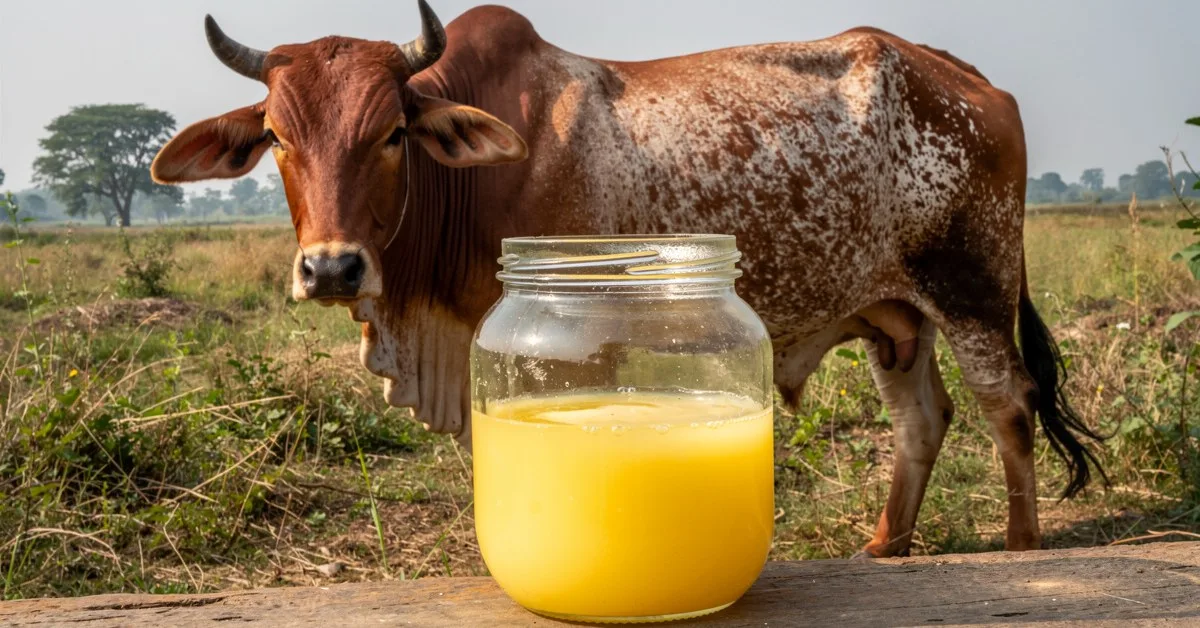
You can often identify authentic A2 ghee simply by examining its physical traits. A genuine product displays a beautiful golden yellow color. This distinct hue reflects the natural beta-carotene and pigments derived directly from the grass-fed cow’s diet. When you open the jar, the aroma should be rich, warm, and distinctly nutty. It should never smell chemical, artificial, or overly sweet. A natural, earthy scent indicates traditional preparation without any synthetic additives or artificial flavorings. Genuine ghee also develops a granular or danedar texture at room temperature. These tiny granules form during the proper slow-heating process and serve as a clear visual indicator that the product is free from cheap oil adulterants.
Label Verification: Certifications and Traceability
Reading the packaging provides another layer of security when shopping for authentic dairy products. Product labels must clearly display FSSAI certification marks to prove they meet national food safety standards. You should also look for transparent ingredient lists showing only one item: ghee or clarified butter derived specifically from A2 milk. Manufacturing dates and batch traceability codes are equally important. These details allow you to verify production timelines and trace the source authenticity back to the original farm. Transparent brands that openly share their farm origins, ethical practices, and independent testing results build genuine trust with informed buyers who care about what they eat.
Home Adulteration Tests for Ghee Purity
- Hot water test: pure ghee melts very quickly and floats clearly on the water surface, while adulterated versions may sink or separate into cloudy layers
- Refrigerator test: pure ghee solidifies uniformly with a distinct granular texture when chilled, whereas mixed oils will freeze unevenly or remain partially liquid
- Pan heating test: pure ghee melts rapidly and turns brownish-black when heated on a stove, but adulterated ghee takes longer to melt and stays stubbornly yellow
- Baudouin test principle: detects vegetable oil adulteration through a chemical reaction, though it typically requires basic laboratory equipment to perform accurately
- Smell test: rub a small amount on your skin; pure ghee releases a pleasant nutty aroma, while adulterated versions smell chemical, synthetic, or rancid
Price, Packaging, and Lab Testing Parameters
Genuine A2 Bilona ghee commands premium pricing for very specific reasons. The production process is highly labor-intensive, and it requires a massive milk-to-ghee ratio compared to industrial methods. Packaging also matters immensely. High-quality glass jars preserve the delicate nutritional profile and prevent the chemical leaching that can occur with synthetic plastic containers. For complete peace of mind, look for laboratory verification through NABL-accredited facilities. These independent labs check the Reichert Meissl value and the Polenske value to confirm dairy purity. They also verify that the moisture content sits strictly under 0.5% and the milk fat content remains above 99.5%. These strict parameters provide absolute assurance that you are buying a completely pure product.
Frequently Asked Questions About A2 Ghee Purity
Is A2 ghee healthier than regular ghee? Yes, A2 ghee contains the specific A2 beta-casein protein, which is significantly easier to digest for many people compared to the A1 protein found in regular commercial milk. It is also naturally rich in essential fatty acids, fat-soluble vitamins, and powerful antioxidants that support overall wellness, joint health, and a strong digestive fire.
What is the shelf life of pure A2 Bilona ghee? Pure A2 Bilona ghee has an exceptionally long shelf life and does not spoil easily due to the complete removal of moisture during the slow-boiling process. When stored properly in an airtight glass jar away from direct sunlight and excess humidity, it can easily last for 12 months or even longer without requiring any refrigeration.
How can I tell if my ghee is fake or adulterated? You can perform several simple home tests to check for quality. Pure ghee will melt quickly and turn brownish-black when heated in a hot pan. If it takes a long time to melt and remains bright yellow, it may be heavily adulterated with cheap oils. Pure ghee also solidifies uniformly in the refrigerator and maintains its signature granular texture.
Why is authentic Bilona ghee more expensive? Authentic Bilona ghee carries a higher price tag because the traditional method is highly labor-intensive and requires a massive volume of raw ingredients. It takes approximately 25 to 30 liters of pure A2 cow milk to produce just 1 liter of Bilona ghee through the traditional curd-churning process, making it a true artisanal product.
Where can I buy authentic A2 ghee? You can buy authentic A2 ghee directly from trusted brands like Goseva. We transparently source our milk from indigenous grass-fed Gir cows and strictly use the traditional Bilona method. We also provide clear FSSAI certification and detailed lab testing parameters to guarantee absolute purity for every single jar we produce.
Making an Informed Choice
Choosing a genuinely healthy cooking fat requires prioritizing source transparency, traditional Bilona methods, and verifiable quality certifications. Consumers should actively support ethical brands that maintain rural gosalas and commit to delivering pure, unadulterated products to your kitchen table. Explore our complete range of authentic A2 Gir cow ghee to experience the profound difference that genuine traditional preparation makes for your family’s daily meals and long-term wellness.
