
- Your cart is empty
- Continue shopping
-
 Pixis Visibility Service
 - Posted on
- Categories:Uncategorized
- 0 comments

Compare A2 Gir Cow Ghee vs Regular Desi Ghee for Ayurvedic Use: Which is Better for Health Benefits and Traditional Formulations?
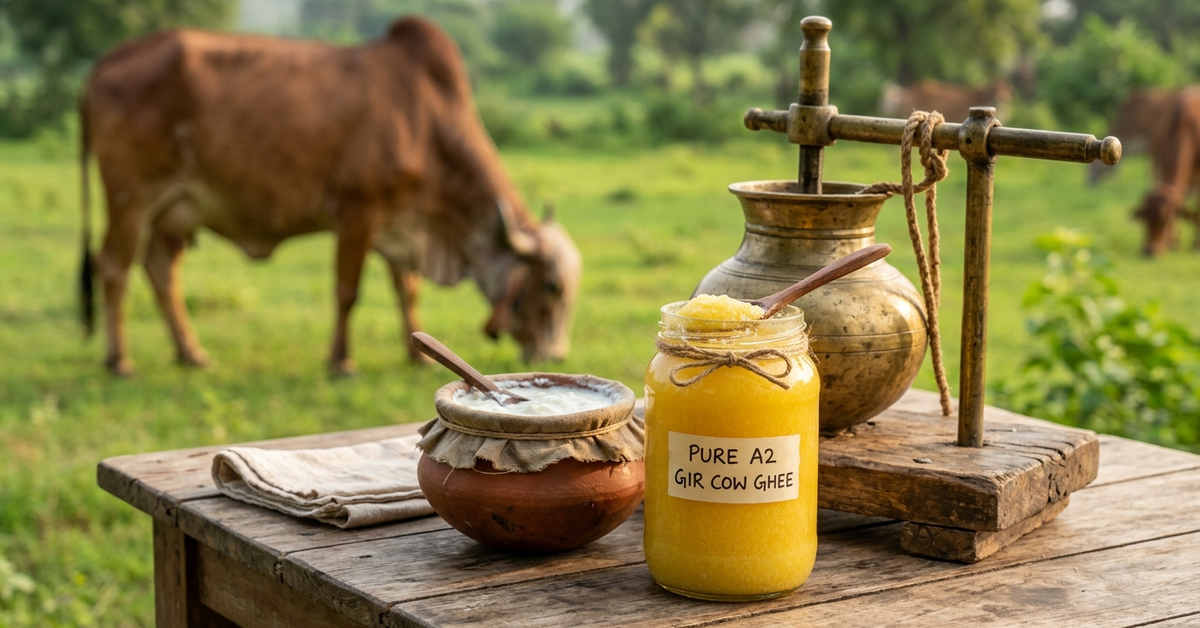
Ghee holds a foundational place in Ayurveda as Ghrita, a healing agent used in everything from daily rejuvenation to intensive detoxification therapies. When you compare A2 Gir cow ghee vs regular desi ghee for Ayurvedic use, which is better for health benefits and traditional formulations? The answer depends on the source of the milk, the protein structure it carries, and how the ghee is prepared. A2 Gir cow ghee, made from the milk of indigenous Gir cows using the traditional Bilona method, stands apart as the gold standard for Ayurvedic purity. Regular desi ghee, often sourced from crossbred or mixed-breed cows, serves well for everyday cooking but falls short in therapeutic contexts. This article breaks down every critical difference so you can make an informed choice for your health and wellness journey.
Introduction: Understanding Ghee in Ayurveda and the Comparison
Ghee in Ayurveda is far more than a cooking fat. The classical texts, including the Charaka Samhita, describe ghee as the “best among all unctuous substances” and classify it as Ajasrika Rasayana, a daily rejuvenative. This elevated status means the quality of ghee you use directly impacts its therapeutic value. The term “desi ghee” in today’s commercial context often refers to ghee made from A1 milk sourced from crossbred cows like Jersey or Holstein Friesian, or from mixed-breed herds. While still ghee, it may not carry the same Ayurvedic potency as ghee from pure indigenous Gir cows.
Understanding this distinction helps you choose the right ghee for your specific needs, whether for daily cooking, medicinal formulations, or Panchakarma therapies. The comparison between A2 Gir cow ghee and regular desi ghee is not just about price or brand preference. It touches on protein structure, preparation methods, nutritional density, and the very principles that make ghee a cornerstone of Ayurvedic healing.
What is A2 Gir Cow Ghee?
A2 Gir cow ghee is clarified butter derived exclusively from the milk of indigenous Gir cows, a Bos indicus breed originating from Gujarat. These cows produce milk containing only A2 beta-casein protein, which lacks the BCM-7 peptide associated with A1 milk. The traditional Bilona method of preparation involves boiling milk, culturing it into curd, hand-churning the curd with a wooden churner to extract butter, and then slowly heating that butter to clarify it into ghee. This labor-intensive process preserves the ghee’s nutritional integrity and Ayurvedic potency, making it the preferred choice for medicinal use. You can learn more about what makes our Bilona A2 ghee authentic by visiting our detailed authenticity guide.
- Sourced exclusively from indigenous Gir cows producing A2 beta-casein protein
- Prepared using the Bilona method, which requires 25 to 30 litres of whole milk to produce 1 kg of ghee
- Contains higher levels of CLA, butyric acid, and Omega-3 fatty acids compared to commercial ghee
- Recognized as the gold standard for Ayurvedic Ghrita formulations and Panchakarma therapies
- Deep golden color with a granular texture when cool and a rich, nutty aroma
What is Regular Desi Ghee?
Regular desi ghee, despite its name, often comes from A1 milk produced by crossbred cows such as Jersey or Holstein Friesian crosses, or from mixed-breed herds. These cows produce milk containing A1 beta-casein protein, which releases the BCM-7 peptide during digestion. BCM-7 is a heptapeptide opioid that acts as a mu-opioid receptor agonist and may influence gastrointestinal physiology. Industrial processing methods typically used for regular ghee involve mechanical cream separation and high-temperature heating, which prioritizes throughput over nutrient preservation.
While regular ghee remains a stable cooking fat with a high smoke point, it does not meet the standards Ayurvedic texts set for therapeutic Ghrita. The distinction matters most when ghee is used for medicinal purposes, where purity and preparation method directly affect efficacy. Regular ghee made from A1 hybrid cows may produce BCM-7 and is not recognized as Ayurvedic grade Ghrita.
Key Differences: A2 vs. A1 Beta-Casein Protein and Digestion
The molecular difference between A2 and A1 beta-casein comes down to a single amino acid substitution at position 67: histidine in A1, proline in A2. This seemingly minor change has significant digestive consequences. The peptide bond between histidine and isoleucine in A1 beta-casein is more readily hydrolyzed, releasing BCM-7 during gastrointestinal digestion. A2 beta-casein, with its proline-isoleucine bond, resists this breakdown. Beta-casein makes up about 30% of the total protein in cow’s milk, so this structural difference affects a substantial portion of what you consume.
A systematic review found evidence that A1 consumption is associated with delayed intestinal transit and looser stool consistency, while digestive discomfort correlates with inflammatory markers for A1 but not A2. A 600-subject randomized, double-blind trial reported that all six gastrointestinal symptom scores were significantly lower after consuming A2 milk compared to conventional A1/A2 milk, with P-values below 0.0001. You can read the full systematic review on A1 versus A2 beta-casein and digestive health for the complete findings.
In Ayurveda, strong digestion (Agni) is the foundation of health. A2 ghee supports this by avoiding the digestive interference that BCM-7 can cause, making it more compatible with Ayurvedic principles of gut health. However, it is worth noting that EFSA reviewed the evidence in 2009 and concluded that a cause-and-effect relationship is not established between dietary BCM-7 intake and non-communicable diseases. The digestive effects are better supported than disease claims. For more on how Ayurveda views digestion, see our Ayurvedic digestion principles.
Traditional Preparation Methods: Bilona vs. Industrial
The Bilona method is the traditional process Ayurveda prescribes for preparing medicinal ghee. It begins with boiling milk, then culturing it into curd using a natural starter. The curd is churned with a wooden churner to separate butter (makhan) from buttermilk, and the butter is slowly heated over a low flame until it clarifies into ghee. This fermentation step creates additional butyric acid and beneficial probiotic byproducts, resulting in a different fatty acid profile compared to cream-separated ghee. Industrial methods skip the curd stage entirely, separating cream mechanically and heating it at higher temperatures for faster throughput.
- Bilona requires 25 to 30 litres of whole milk per kg of ghee, versus 8 to 10 litres of cream in industrial methods
- The curd fermentation step produces additional butyric acid and probiotic byproducts
- Slow, low-heat clarification preserves fat-soluble vitamins A, D, E, and K2
- Ayurvedic texts specifically prescribe the Bilona method for medicinal Ghrita preparations
- The yield difference is the primary reason for the price gap between Bilona and industrial ghee
Nutritional Profile Comparison: Vitamins, Fatty Acids, and More
A2 Gir cow ghee offers a nutritionally superior profile compared to regular commercial ghee. Grass-fed A2 Gir ghee is often described as richer in CLA and beta-carotene, with a more balanced Omega-3 to Omega-6 ratio than regular commercial ghee, though exact levels vary with diet and season. Butyric acid content in A2 ghee ranges from 3.5 to 4.5 grams per 100 grams, nourishing the gut lining and supporting a healthy microbiome. CLA content of 1.0 to 2.0 grams per 100 grams in A2 Bilona ghee supports healthy body composition and metabolic balance.
The saturated fats in A2 ghee also act as carriers for fat-soluble vitamins A, D, E, and K, which the body cannot absorb efficiently without a fat medium. Regular commercial ghee, by contrast, typically has an Omega-3 to Omega-6 ratio of approximately 5.7:1 and baseline CLA and beta-carotene levels. Gir cow milk itself has a slightly higher fat percentage of 4.69 to 4.97% compared to other indigenous breeds, contributing to the ghee’s rich nutritional density. These nutritional advantages come primarily from the cow’s diet and traditional processing, not the breed alone, which is why sourcing from grass-fed, well-cared-for herds matters so much.
Ayurvedic Significance and Traditional Formulations
In Ayurveda, ghee is called Ghrita and serves as a Sattvic food and powerful Rasayana, or rejuvenative. The Charaka Samhita describes ghee as the “best among all unctuous substances” and classifies it as Ajasrika Rasayana, a daily rejuvenative. Ghrita functions as an Anupana, a carrier vehicle that delivers herbal medicines deep into the body’s tissues for effective detoxification and healing. The Ayurvedic Pharmacopoeia of India provides formal monographs for Ghrita formulations with specific preparation standards, including three processing stages: Mridu Paka for nasal administration (Nasya), Madhyama Paka for oral or rectal use, and Khara Paka for topical application.
Panchagavya Ghrita, a widely used Ayurvedic formulation, is prepared by processing ghee with milk, curd, urine, and dung extract, all from cow sources. A published study on Panchagavya Ghrita specifically used raw materials from the Gir variety of indigenous cow, demonstrating the breed’s recognized role in Ayurvedic medicine. You can read the full Panchagavya Ghrita study for details on its preparation and therapeutic applications. Only pure A2 Gir cow ghee is considered suitable for these high-level traditional formulations due to its Sattvic qualities and absence of toxins.
Specific Ayurvedic formulations like Malkangni Ghrita, an Ayurvedic memory booster made from Gir cow curd, and Kumar Kalyan Ghrita, formulated for children’s health and cognitive development, rely on the purity of A2 Gir cow ghee as their base. These formulations would lose their therapeutic integrity if prepared with regular commercial ghee from crossbred cows.
Health Benefits: A2 Gir Cow Ghee vs. Regular Desi Ghee
A2 Gir cow ghee delivers a range of health benefits that regular desi ghee cannot fully match. Its A2 protein structure avoids the release of BCM-7, reducing bloating and digestive discomfort, particularly for people who experience intolerance to regular dairy. The higher CLA and butyric acid content supports gut health, immunity, and metabolic balance. A2 ghee also nourishes Ojas, the Ayurvedic concept of vitality and immunity, promoting overall strength and resilience. Regular ghee still provides benefits as a stable cooking fat with a high smoke point of 232 to 252 degrees Celsius, and both types are effectively lactose-free and casein-free after proper clarification. For therapeutic applications, the differences become significant.
- Improved digestion: A2 ghee avoids BCM-7 release, supporting smoother gastrointestinal function
- Boosted immunity: Higher CLA and butyric acid content strengthens the gut lining and microbiome
- Enhanced brain function: Omega-3 fatty acids and fat-soluble vitamins support neurological health and memory (medha)
- Ojas building: A2 ghee nourishes the subtle essence of vitality and immunity in Ayurvedic theory
- Anti-inflammatory support: The balanced Omega-3 to Omega-6 ratio helps reduce systemic inflammation
- Detoxification: A2 ghee serves as an effective carrier in Panchakarma cleansing therapies
Factors Influencing Ghee Quality Beyond A2/A1
The A2 versus A1 distinction is important, but several other factors shape ghee quality. The cow’s diet plays a critical role: grass-fed cows produce milk with higher CLA, beta-carotene, and Omega-3 content compared to grain-fed cows. Living conditions matter too. Stress-free, natural environments where cows can graze freely produce better quality milk. The purity of the milk and the absence of additives or preservatives further determine the final ghee’s nutritional value and Ayurvedic properties.
At Gomataseva, we source our Gir cow ghee from rural gosalas and ethical farmers who follow traditional indigenous cow-rearing practices. Our 14+ years of experience with a Gaushala since 1960, combined with the ICAR–NBAGR Breed Conservation Award 2023 for Gir-cattle conservation, ensure that every jar meets the standards Ayurveda demands. We are committed to empowering rural gosalas and farmers, and our ghee is lab-tested and made without synthetic preservatives. These commitments to ethical sourcing and traditional methods set our products apart in a market where authenticity can be difficult to verify. Learn more about why certification matters for Ayurvedic products.
Quick Comparison Table: A2 Gir Ghee vs. Regular Desi Ghee
| Feature | A2 Gir Cow Ghee | Regular Desi Ghee |
|---|---|---|
| Milk Source | Indigenous Gir cows (Bos indicus) | Crossbred or mixed-breed cows (often A1) |
| Protein Type | A2 beta-casein (no BCM-7 release) | A1 or mixed A1/A2 beta-casein (releases BCM-7) |
| Preparation Method | Bilona method (curd-churned, slow heat) | Industrial cream separation (high-temperature) |
| CLA Content | 1.0 to 2.0 g per 100 g (300 to 500% higher if grass-fed) | Baseline levels |
| Butyric Acid | 3.5 to 4.5 g per 100 g | 3 to 4% (comparable) |
| Omega-3:Omega-6 Ratio | Approximately 1:1 | Approximately 5.7:1 |
| Fat-Soluble Vitamins | Higher A, D, E, K2 (grass-fed) | Lower levels |
| Ayurvedic Preference | Yes, recognized as Ghrita for therapeutic use | No, not recognized as Ayurvedic grade Ghrita |
| Price Range (per kg) | Rs 1,500 to Rs 4,500 | Rs 500 to Rs 1,200 |
Which is Better for Ayurvedic Use and Health Benefits?
The verdict is clear: A2 Gir cow ghee is the superior choice for Ayurvedic use and health benefits. Its A2 beta-casein protein structure avoids the release of BCM-7, supporting better digestion and reducing inflammation. The Bilona method of preparation preserves nutrients and aligns with the standards Ayurvedic texts prescribe for medicinal Ghrita. The superior nutritional profile, with higher CLA, butyric acid, and a balanced Omega-3 to Omega-6 ratio, delivers therapeutic benefits that regular ghee cannot match.
For specific use cases, A2 Gir ghee is essential for Panchakarma therapies, herbal formulations, and daily rejuvenation. Regular ghee remains acceptable for general cooking, but for anyone seeking the full health benefits and traditional formulations that Ayurveda describes, A2 Gir cow ghee is the correct choice. If you are ready to experience the difference, explore our range of authentic Gir cow products and discover why purity matters. For those outside India, you can also buy authentic Gir cow ghee online in the USA through our trusted sourcing network.
Frequently Asked Questions (FAQs)
Is A2 ghee suitable for everyone?
Yes, A2 ghee is suitable for everyone, including those with sensitive digestion. Unlike A1 ghee, it does not release the BCM-7 peptide, making it easier to digest and less likely to cause inflammation or digestive discomfort. For most people, both A2 and regular ghee digest equally well after proper clarification, but A2 ghee has a slight edge for hypersensitive individuals who react to trace A1 casein.
Can regular ghee be used in Ayurveda?
While regular ghee may be used in cooking, it is not recommended for medicinal Ayurvedic formulations. Pure A2 Gir cow ghee is preferred in Ayurveda because it possesses the necessary Sattvic qualities and lacks toxins that could interfere with healing. For general cooking, regular ghee works; for therapeutic use such as Panchakarma, gut healing, and classical formulations, A2 Bilona ghee is the correct choice.
How to identify authentic A2 Gir ghee?
To identify authentic A2 Gir ghee, look for certifications confirming the use of the Bilona method and milk sourced exclusively from Gir cows. Trusted brands like Gomataseva provide transparent sourcing and quality assurance for their products. Genuine A2 Bilona ghee typically costs Rs 1,500 to Rs 4,500 per kg, so suspiciously cheap ghee labeled as A2 Bilona is likely not authentic.
What is the difference between A1 and A2 milk?
The primary difference is the beta-casein protein structure. A1 milk contains a peptide called BCM-7, which can cause inflammation and digestive issues. A2 milk lacks this peptide, making it safer, more anti-inflammatory, and easier to digest. A2 milk comes from indigenous Asian and African breeds like Gir and Sahiwal, while A1 dominates in European-type cattle such as Holstein and Friesian.
Why is Ghee called Ghrita in Ayurveda?
In Ayurveda, ghee is called Ghrita because it is considered a Sattvic food and a powerful Rasayana (rejuvenative). It is used as an Anupana (carrier) to deliver herbal medicines deep into the body’s tissues for effective detoxification and healing. The Ayurvedic Pharmacopoeia of India provides formal monographs for Ghrita formulations with specific preparation standards and three processing stages for different therapeutic routes.
Conclusion
A2 Gir cow ghee stands as the definitive choice for Ayurvedic health and traditional formulations. Its A2 protein structure, Bilona preparation method, and superior nutrient density set it apart from regular desi ghee in every meaningful way. The Charaka Samhita recognized ghee as the best among unctuous substances, and modern research on A2 versus A1 beta-casein supports what Ayurveda has taught for centuries. At Gomataseva, we are committed to providing authentic, quality-certified A2 Gir cow ghee prepared through traditional methods, sourced from rural gosalas with 14+ years of experience and a Gaushala heritage dating to 1960. Our ghee is lab-tested and made without synthetic preservatives, staying true to the principles of natural wellness.
Take the next step in your wellness journey and explore our authentic A2 Gir cow Bilona ghee to experience the difference that tradition and purity make. Your body, your digestion, and your daily rejuvenation practice deserve nothing less.
